When Two Worlds Collide on a Lonely Highway
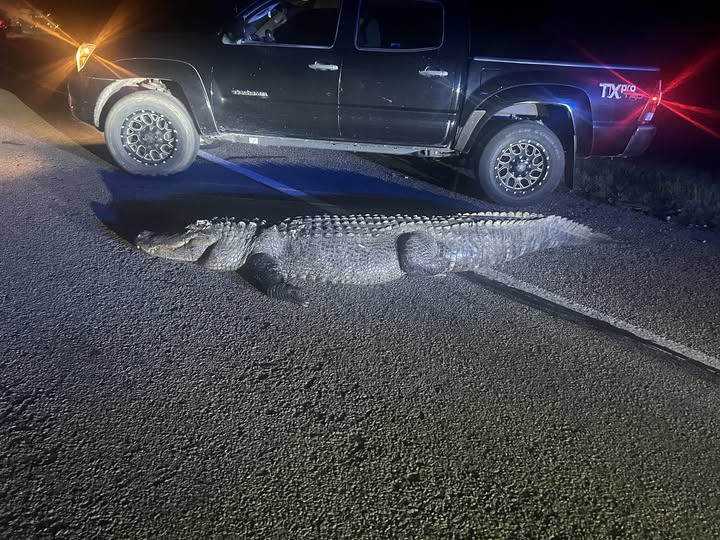
In the quiet stretches of Cass County, where the Texas pines meet the damp heat of the lowlands, a prehistoric giant met a modern tragedy. A 12-foot alligator—a creature that likely survived decades of harsh winters and scorching summers—met its end on the asphalt. It is a sobering reminder that as our roads expand and our cities grow, the ancient paths of our wildlife are becoming increasingly dangerous. This wasn’t just a road hazard; it was a living relic of the swamp, moving through the world the only way it knew how, looking for a home and a mate, only to be met by steel and speed.
The Heavy Burden of the Final Call
When the Texas Game Wardens arrived on the scene, they weren’t just responding to a car accident. They were walking into a situation where nature and humanity had clashed with devastating results. The decision to dispatch such a magnificent creature is never easy for those who dedicate their lives to protecting them. It is a heartbreaking necessity born of trauma—an animal too injured to survive or too large to safely relocate in its distressed state. This 12-foot titan, which had likely spent thirty or forty years ruling its waterway, saw its journey end not in the quiet of the marsh, but under the glare of flashing sirens and the smell of burnt rubber.
A Plea for Awareness in the Season of Movement
As spring and summer take hold, alligators are driven by an ancient instinct to wander. They are on the move, crossing from one waterway to the next in a desperate search for connection. We share this land with them, yet we often forget they are there until it is too late. This tragedy serves as a haunting call to all who travel these roads: stay vigilant. If you see one of these giants, give them space. If they are left alone, they will find their way. This loss in Cass County is a heavy one, a reminder of the fragile balance between our fast-paced lives and the slow, steady pulse of the natural world that surrounds us.
