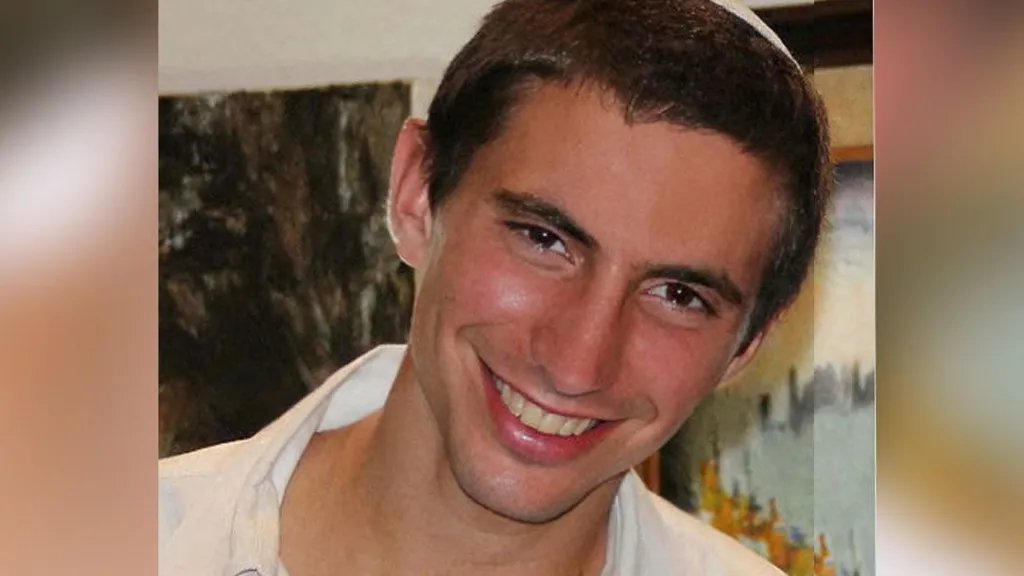
After ten long years, Israel buries a soldier whose memory became a national symbol, closing a painful chapter while a nation still waits for others left behind.
A Promise Fulfilled: The Long Road Home for a Fallen Hero
The weight of a decade was lifted, yet the grief remains as fresh as yesterday. Israel has finally received the body of Lt. Hadar Goldin, the 23-year-old soldier killed in a devastating Hamas ambush in 2014 during a supposed ceasefire. For ten years, his family existed in a state of suspended animation, their son a prisoner even in death. His father, Simcha Goldin, became a tireless advocate, his voice a constant reminder of a promise unfulfilled. That promise was kept this week as part of a broader ceasefire deal, bringing a painful, bittersweet closure. Lt. Goldin’s body, held in Gaza since the 2014 war, was formally identified by the Israeli military, allowing him to finally be laid to rest in his homeland, leaving behind parents, a sister, two brothers, and a fiancée whose life was put on hold by the tragedy.
A Nation’s Symbol: The Picture on the Prime Minister’s Wall
Lt. Goldin’s story transcended personal tragedy to become a national rallying cry. Israeli Prime Minister Benjamin Netanyahu and President Isaac Herzog revealed they had kept a picture of the young soldier in their offices for the past eleven years—a silent, daily vow to secure his return. “We didn’t give up on him,” Netanyahu stated, articulating a sentiment that united the country. The effort to retrieve him involved “extensive intelligence efforts” and operational activities spanning a decade, culminating in the intense military campaign following the October 7th attacks. His return is a somber victory, a testament to a national ethos that leaves no one behind, alive or dead. It is a resolution that countless other families of hostages still desperately seek, their own anguish amplified by this single homecoming.
The High Cost of Return: A Legacy of Conflict and a Ceasefire’s Fragile Hope
Lt. Goldin’s death and the mission to recover him have been inextricably linked with immense human cost. He was killed just after a ceasefire began in 2014, and the immediate Israeli military response to his capture, the “Hannibal Directive,” led to scores of Palestinian civilian casualties in Rafah. His return now is set against the backdrop of a new, devastating war sparked by the October 7th attacks, a conflict that has claimed over 69,000 lives in Gaza according to local health authorities. His body was returned in a complex swap that has seen hostages freed, Palestinian prisoners released, and aid increased, yet the deal remains fragile. While Lt. Goldin’s family can now visit a gravesite, their long vigil ended, his story remains a stark reminder of the deep, enduring wounds of the conflict and the fragile, heartbreaking negotiations required to heal even the smallest of them.
